Air Bike Seat Height Is Probably Why Your Knees Hurt — Here's the 5-Second Fix
Quick Answer: If your knee hurts on the air bike, check seat height first — at the bottom of the pedal stroke your knee should have a slight bend (about 25-35 degrees), not be fully locked out or sharply bent, and this single adjustment fixes most air bike knee pain.
You’ve stretched, foam rolled, and iced, and your knees still ache after every air bike session. Before assuming it’s an overuse injury, check one thing that takes 5 seconds and gets skipped by almost everyone: the seat.
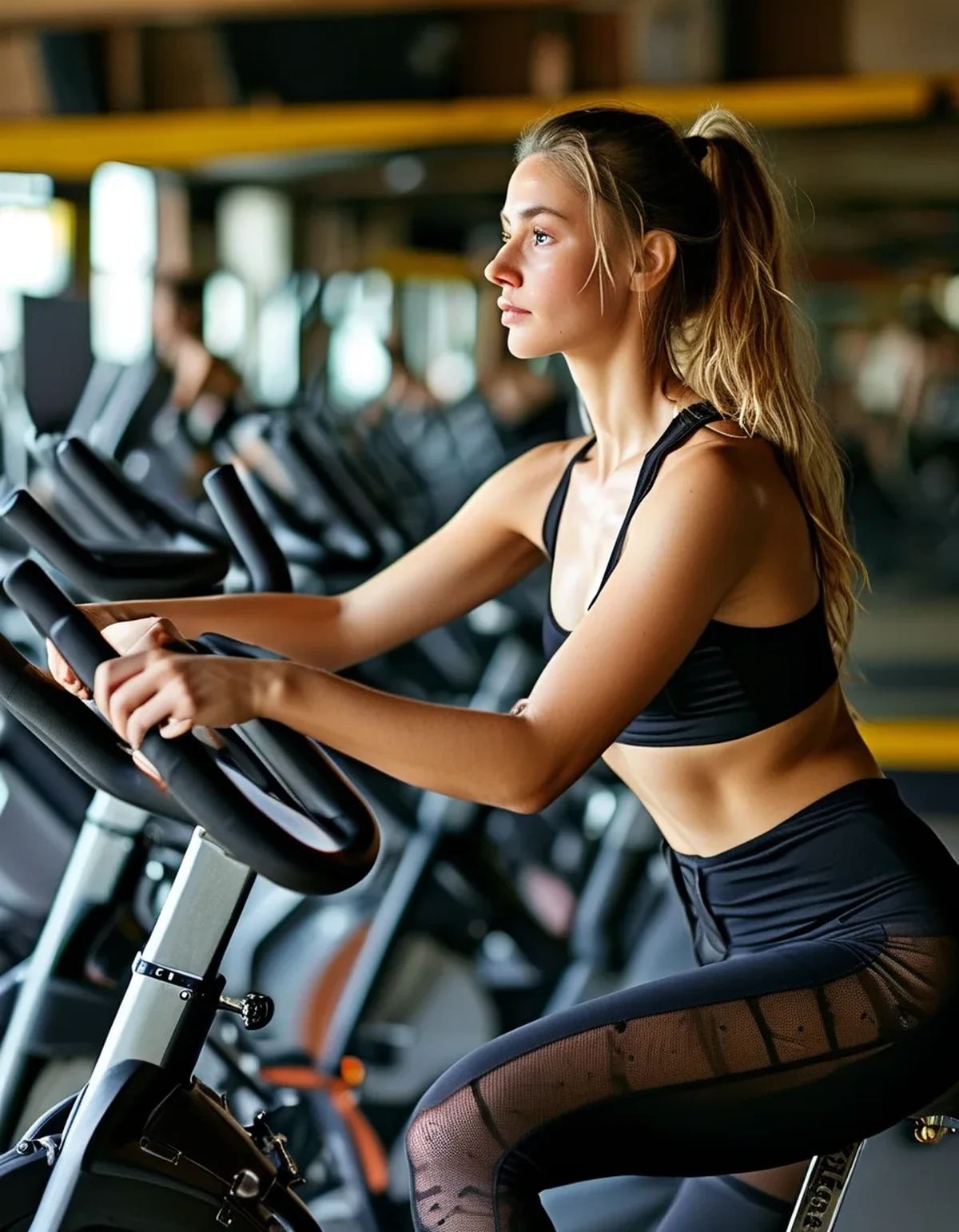
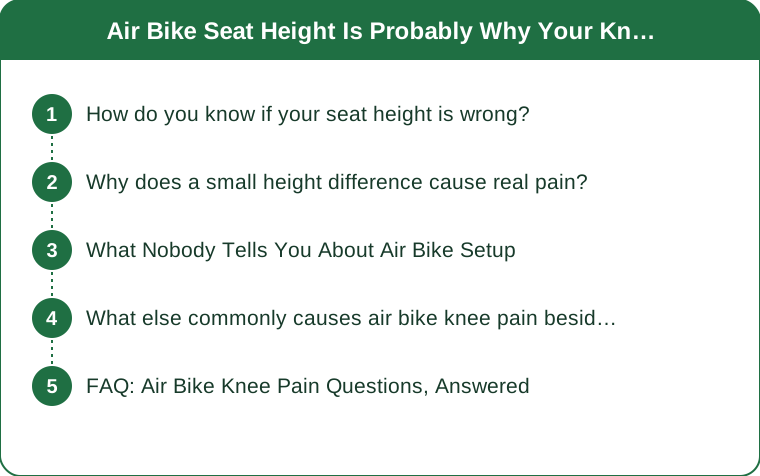
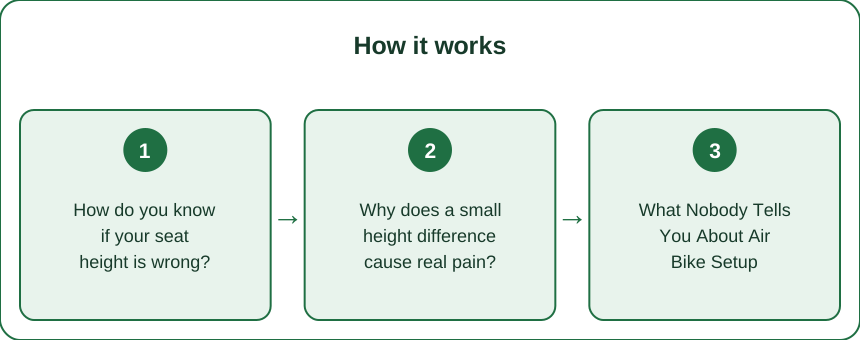
How do you know if your seat height is wrong?
Pedal to the bottom of the stroke with your heel on the pedal. Your knee should have a slight, soft bend — not locked straight, not sharply bent. A locked-straight knee at the bottom means the seat is too high; a sharply bent knee means it’s too low.
Too-high seats cause hip rocking and stress the back of the knee; too-low seats overload the front of the knee (the kneecap tracking) with every stroke.
Why does a small height difference cause real pain?
Because an air bike session is hundreds to thousands of repetitions in a single workout. A knee angle that’s off by even an inch of seat height compounds fast — a stress that would be minor once becomes significant after 500+ reps.
This is also why pain often shows up as a dull ache that builds during a session rather than a sudden sharp pain — it’s cumulative, not acute.
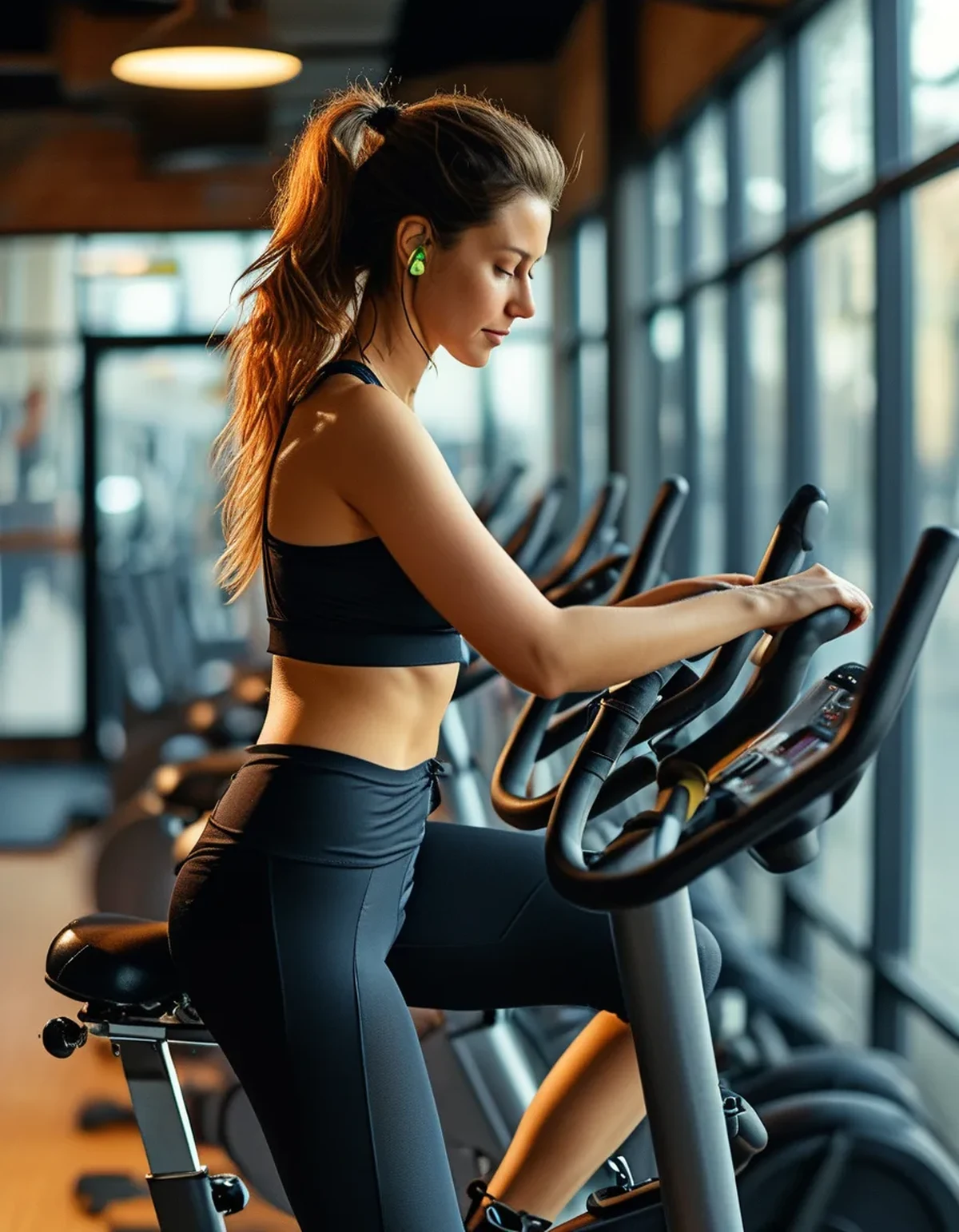
What Nobody Tells You About Air Bike Setup
Most people set their seat height once, guess, and never touch it again — even after changing shoes, which changes effective leg length by half an inch or more. Thick-soled training shoes versus flat shoes can be the hidden reason your ‘correct’ seat height suddenly isn’t.
Check seat height any time you change footwear for air bike sessions, not just once when you first sit down.
What else commonly causes air bike knee pain besides seat height?
Toe-in or toe-out foot position on the pedals — knees should track roughly over your second toe, not angled in or out. Cold starts also matter: jumping into max effort with cold joints stresses the knee more than the same effort after a 3-5 minute easy warm-up spin.
FAQ: Air Bike Knee Pain Questions, Answered
How do I find my exact seat height without a professional fit?
Stand next to the bike and set seat height level with your hip bone as a starting point, then fine-tune using the bottom-of-stroke knee bend check — small adjustments of half an inch at a time.
Should I stop air bike sessions completely if my knee hurts?
Sharp or swelling pain means stop and check with a professional; a dull ache that improves after a seat adjustment usually means you can continue at reduced intensity.
Does seat fore-aft position matter as much as height?
Yes, though less commonly the cause — a seat too far forward can also stress the front of the knee. Fix height first since it’s the more common culprit, then check fore-aft if pain persists.
TL;DR:
- Slight knee bend at the bottom of the pedal stroke — not locked, not sharply bent
- A small height error compounds fast over hundreds of reps into real knee stress
- Recheck seat height whenever you change shoes — sole thickness changes effective leg length
- Toe tracking and a proper warm-up also matter, but seat height is the most common fix
One 5-second check before your next session could be the whole fix. This is general information, not medical advice.
Keep Reading
This article is for general informational and styling purposes only. Fit, sizing, and product availability may vary.