Why Your Air Bike Numbers Look Worse Than Your Actual Effort
Quick Answer: Air bike displays measure output at the flywheel, not your total effort — arm-heavy pushing, poor seat height, and low cadence all waste energy that never registers on the screen, making genuinely hard efforts look unimpressive in the numbers.
You finish a set gasping, legs burning, and glance at the display expecting a big number — and it’s underwhelming. Before assuming the bike is broken or you’re out of shape, it’s worth understanding what that number is actually measuring.

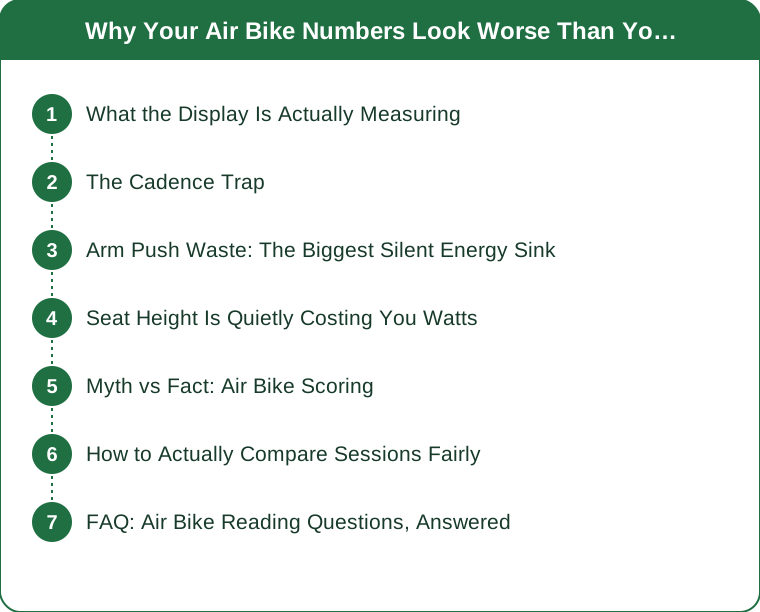
What the Display Is Actually Measuring
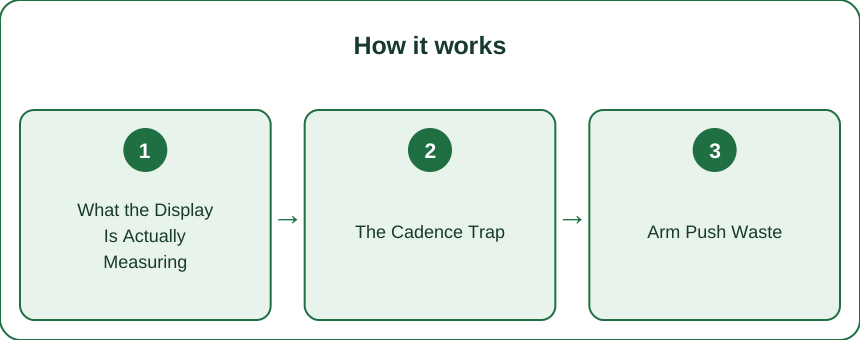
Air bike readouts calculate calories and watts from flywheel resistance and rotation speed — essentially how much air you’re moving and how fast. That means effort spent on anything other than efficiently turning the flywheel (wasted arm motion, poor posture, inconsistent pedal stroke) burns real energy in your body without showing up on the screen at all.
The Cadence Trap
Air resistance increases roughly with the square of your speed, meaning small cadence increases produce outsized jumps in resistance and score. Someone pedaling in short, choppy bursts with big rests between will always show lower numbers than someone holding a steady, moderate cadence — even if total effort feels similar to the person doing it.
Arm Push Waste: The Biggest Silent Energy Sink
Many riders push hard with their arms in a way that feels productive but contributes very little to flywheel speed compared to leg drive. If your arms are more fatigued than your legs after a set, you’re likely wasting effort on a movement pattern that isn’t translating efficiently into the number on screen.

Seat Height Is Quietly Costing You Watts
A seat set too low or too high changes your leg’s mechanical leverage through the pedal stroke, reducing how much force reaches the flywheel per stroke. Set the seat so your knee has a slight bend (not fully extended) at the bottom of the pedal stroke — this small adjustment alone can noticeably change your calorie readout at the same perceived effort.
Myth vs Fact: Air Bike Scoring
Myth: A low number means low effort. Fact: technique inefficiency can hide real effort from the display — heart rate and perceived exertion are often better effort indicators than the screen for beginners still building bike-specific technique.
Myth: Higher resistance settings always mean a harder workout. Fact: air bikes don’t have adjustable resistance like a stationary bike — resistance comes purely from your own pedaling speed, so there’s no dial to blame or credit.
How to Actually Compare Sessions Fairly
Track cadence and calories together rather than calories alone, and try to keep cadence consistent between comparison sessions — comparing a steady 70 RPM session to a choppy interval session isn’t a fair test of fitness progress, even if both felt equally hard.
FAQ: Air Bike Reading Questions, Answered
Should I trust the calorie count for tracking weight loss?
Use it as a rough relative indicator between your own sessions, not an absolute number — air bike calorie algorithms are notoriously imprecise compared to actual metabolic measurement.
Why do my numbers vary a lot between similar-feeling workouts?
Small cadence and technique variations cause outsized score swings due to the squared relationship between speed and resistance — this is normal and doesn’t mean your fitness varies that much.
Is heart rate a better measure than the bike’s display?
For tracking real cardiovascular effort, yes — heart rate reflects your body’s actual work, while the display reflects only what successfully reached the flywheel.
TL;DR:
- The display measures flywheel output, not total body effort
- Choppy, inconsistent cadence scores worse than the same effort held steady
- Arm-heavy pushing wastes energy that never reaches the flywheel
- Fix seat height for a slight knee bend to improve mechanical efficiency
- Use heart rate alongside the display, not the display alone
A low number after a genuinely hard set usually means technique, not fitness — dial in cadence, seat height, and leg-drive first before doubting the effort itself.
Keep Reading
This article is for general informational and styling purposes only. Fit, sizing, and product availability may vary.