The Air Bike Form Mistake That's Quietly Causing Your Lower Back Pain
Quick Answer: Lower back pain from air bike use is most often caused by excessive forward lean and rounding through the torso during hard efforts — maintaining a more upright, braced core position through the whole interval eliminates most of this discomfort.
The air bike gets blamed for a lot of post-workout backaches, but the machine itself isn’t usually the problem — how your torso is positioned during hard intervals almost always is.
Why does hard effort on the air bike specifically tend to cause back pain?
As intensity increases, especially during sprint intervals, there’s a strong tendency to lean forward and round the lower back to generate more power through the arms and legs — this collapsed position puts real strain on the lumbar spine that a neutral, braced position wouldn’t.
This happens more at high effort because fatigue makes maintaining good posture harder exactly when the instinct is to sacrifice form for output — the moments you most need good positioning are when it’s hardest to maintain.
What does correct air bike posture actually look like under hard effort?
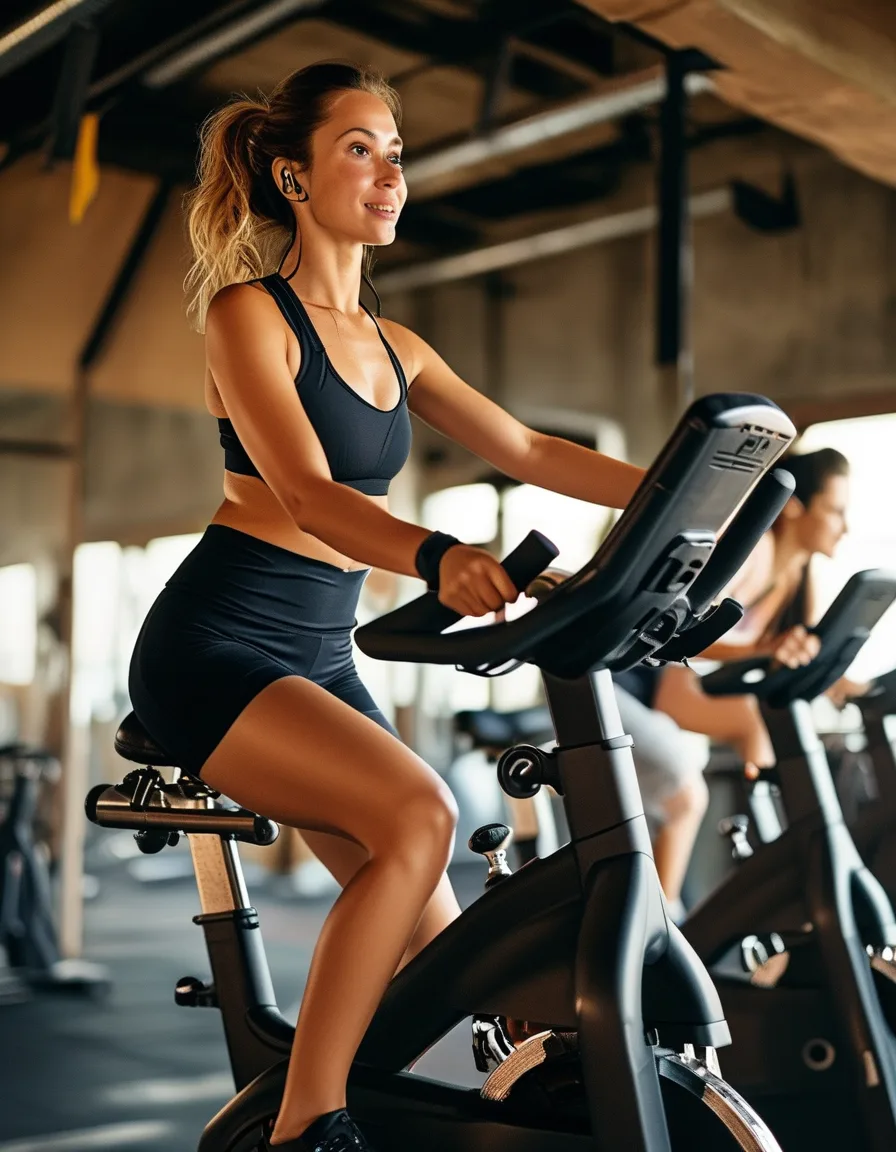
A relatively upright torso with a braced core, rather than hunching forward over the handlebars — think of maintaining roughly the same spine position you’d use in a plank, not collapsing into it as fatigue sets in.
Keeping shoulders back and down rather than rounded forward, and actively bracing your core throughout the interval (not just at the start), maintains the neutral spine position that prevents strain even as effort increases.

5 Mistakes Causing Air Bike Back Pain
Mistake 1: Leaning heavily on the handlebars for extra power. This rounds the spine and shifts strain to the lower back instead of the legs where power should come from.
Mistake 2: Losing core brace as fatigue sets in during intervals. The moment form matters most is exactly when it tends to break down.
Mistake 3: Seat height set too low. This forces excessive knee flexion and compensatory torso lean to generate power.
Mistake 4: Gripping the handlebars too tightly. Tension in the upper body often correlates with tension and poor positioning through the torso.
Mistake 5: Skipping a dynamic warmup before high-intensity intervals. Cold, unprepared core muscles are less able to maintain bracing under hard effort.
Does seat height actually matter for back pain specifically?
Yes — a seat set too low forces more forward lean to compensate, directly contributing to the rounded posture that causes strain, while a properly adjusted seat (roughly hip height, allowing near-full leg extension) supports a more upright working position naturally.
Checking seat height before addressing posture cues is worth doing first, since a poorly adjusted seat can make correct posture nearly impossible to maintain regardless of core awareness.
FAQ: Air Bike Back Pain Questions, Answered
How do I know if my seat height is correct?
With the pedal at its lowest point, your leg should have a slight bend at the knee, not be fully locked out or heavily bent — fully locked or heavily bent both indicate incorrect height.
Should I stop using the air bike entirely if my back hurts?
Acute or sharp pain warrants stopping and assessing; mild dull soreness from poor form usually resolves once posture is corrected — persistent or severe pain should be checked by a professional. This is general information, not medical advice.
Does core strength training help prevent this issue long-term?
Yes — a stronger core is better able to maintain bracing through fatigue, meaning dedicated core work can meaningfully reduce this issue over time alongside form correction.
TL;DR:
- Lower back pain usually comes from forward lean and rounding, not the machine itself
- Maintain an upright, braced torso position throughout intervals, especially as fatigue increases
- Check seat height first — too low forces compensatory lean
- Persistent core bracing under fatigue is the actual skill to build
The air bike isn’t the enemy — a collapsed torso under hard effort is, and it’s fixable with position awareness.
Keep Reading
This article is for general informational and styling purposes only. Fit, sizing, and product availability may vary.