Using the Air Bike After Leg Day Without Wrecking Your Recovery
Quick Answer: Easy air bike work after leg day helps; hard air bike work after leg day competes. The useful version is 8 to 12 minutes at a conversational effort - roughly 50 to 60 percent of max heart rate, where you could hold a conversation - either immediately after lifting or the following morning. What sabotages recovery is intervals: sprint work on already-fatigued legs adds fatigue with no recovery benefit and blunts the strength adaptation you just paid for. If the legs are the thing you are trying to grow, keep hard bike sessions at least six hours away from the lift, ideally on separate days.
The air bike is uniquely tempting after squats because it feels productive and it is right there. It is also uniquely capable of turning a good leg session into four days of stairs being a problem. Duration and intensity decide which one you get.
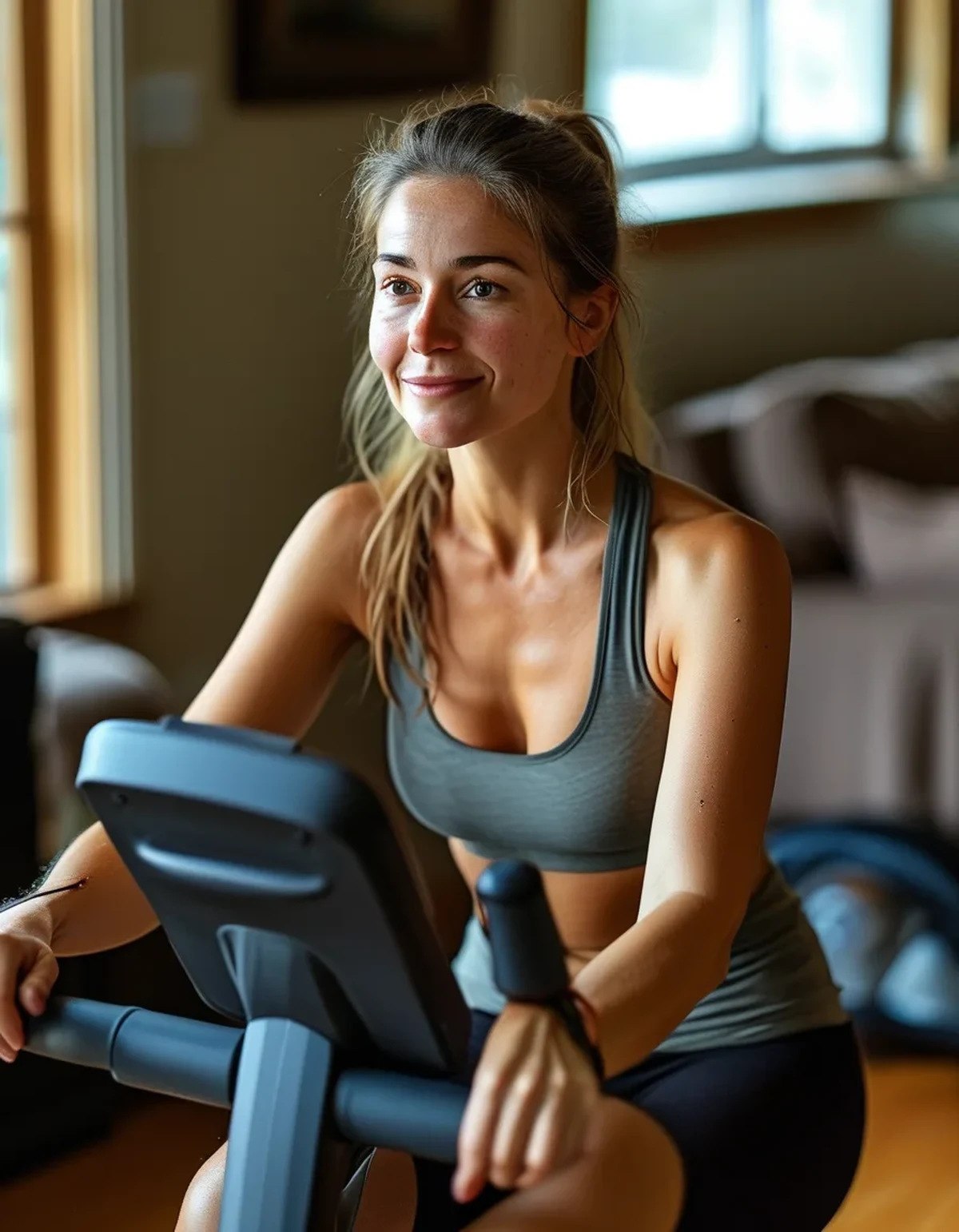
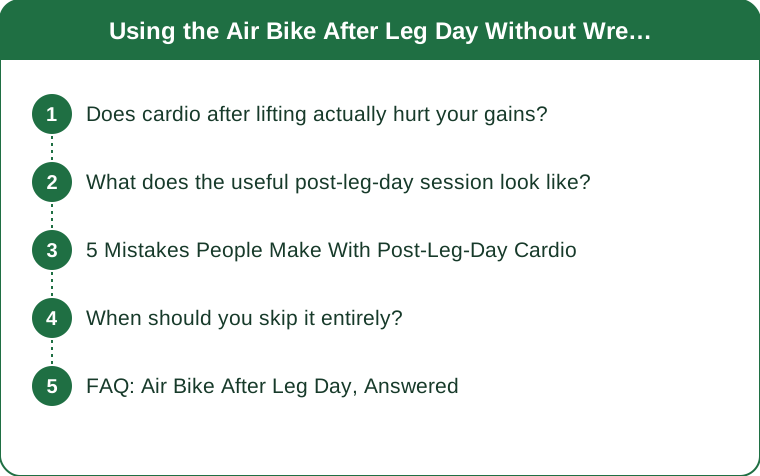
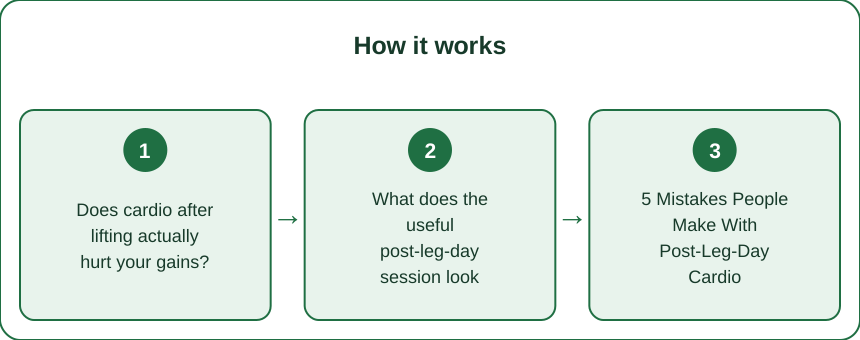
Does cardio after lifting actually hurt your gains?
Only in specific doses. The interference effect is real but frequently overstated online. What the research consistently suggests is that the interference scales with the duration and intensity of the cardio, and with how close it sits to the strength session.
High-intensity intervals are the problematic version. Hard bike sprints recruit the same fatigued muscle and add substantial metabolic stress on top of a system already working on repair. That is the combination that most reliably compromises the strength adaptation.
Low-intensity work is a different thing entirely. Easy pedaling increases blood flow to muscle that is trying to clear metabolites and deliver nutrients, without adding meaningful new damage. This is why the same machine can be either recovery or a second workout.
Separation in time reduces the conflict. The commonly cited guidance is around six hours between a strength session and hard cardio when both matter, which for most people means the lift in the morning and the bike in the evening, or simply different days.
And modality matters less than people think, with one exception: cycling shares muscle groups with squatting more than an upper-body machine would, so an air bike using arms and legs together is a reasonable compromise - the arms take a share of the work that legs would otherwise do alone.
What does the useful post-leg-day session look like?
Duration: 8 to 12 minutes. Long enough to raise circulation, short enough to add negligible fatigue. Beyond about 15 minutes on a fatigued lower body, you are training rather than recovering.
Intensity: conversational. If you cannot speak a full sentence, you are too high. In heart rate terms this lands around 50 to 60 percent of max; on an air bike this is a notably gentle effort, and it will feel almost pointless. That is correct.
Timing option one - immediately after the lift. Convenient, keeps the session in one block, and works well when the lift was moderate. Keep it strictly to the easy end.
Timing option two - the next morning. Often the better version. Ten easy minutes the day after a heavy squat session reliably makes the day-two soreness more tolerable, and there is no interference question at all because the strength session is over.
Arms and legs together, deliberately. Letting the upper body contribute reduces the load on sore quads and hamstrings while keeping the circulatory benefit. If the legs are truly wrecked, arms-only for a few minutes is a legitimate option that most people never consider.
Cadence over resistance. Spin at a comfortable, steady rate rather than grinding - the goal is blood flow, not force production. Grinding a high-resistance effort on damaged muscle is the opposite of what this session is for.
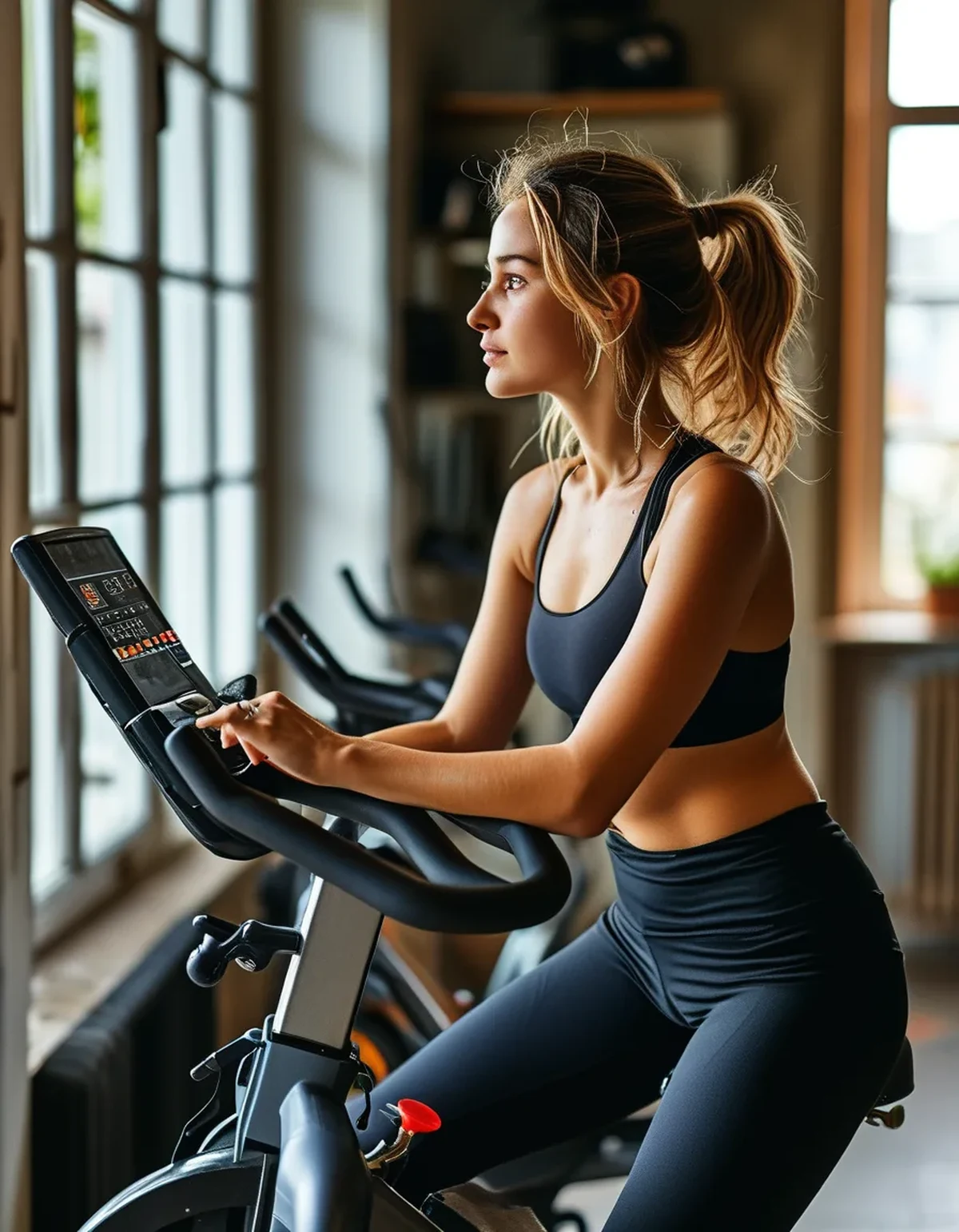
5 Mistakes People Make With Post-Leg-Day Cardio
Mistake one: treating it as a finisher. The classic ten-minute all-out air bike finisher after a heavy squat day feels virtuous and functions as a second leg workout. If you want a finisher, put it after an upper-body day.
Mistake two: using it to punish yourself for the diet. Adding hard cardio to a heavy lifting day to burn more calories reliably produces worse recovery, worse sleep, and worse performance the next session - and it is usually chasing a number that better eating would solve more comfortably.
Mistake three: going long instead of going easy. Forty easy minutes is still forty minutes of load on legs trying to repair. Easy and short is the combination; either alone is not it.
Mistake four: ignoring how sore the legs actually are. Severe delayed onset soreness means the tissue is genuinely damaged, and forcing a session with compromised mechanics is how the knee or lower back ends up complaining. Walking is a completely reasonable substitute on those days.
Mistake five: skipping the fuel and the fluid. A post-lift bike session on an empty stomach with no water after a heavy squat day is stacking three recovery problems. Eat, drink, then spin.
And the bonus mistake: believing the soreness is the point. Soreness measures unfamiliarity, not effectiveness, and adding a bike session specifically to increase it is chasing the wrong signal entirely.
When should you skip it entirely?
When the legs are severely sore. Not the pleasant stiffness of a good session - the version where sitting down is a controlled fall. That is significant muscle damage, and adding load slows repair. Walk instead.
When sleep was short. Recovery is largely a sleep-driven process, and adding a session on top of five hours of sleep is subtracting from the same account twice.
When the next hard session is inside 24 hours. If tomorrow is a heavy day, today’s easy bike is fine but any hard bike is borrowing from tomorrow’s performance.
When knees or lower back are complaining. Fatigued muscles change how you sit and pedal, and a compromised seat position with tired legs is where the classic air bike knee and low-back complaints come from. Check seat height before assuming the machine is at fault.
When it is being used to avoid rest. The most common reason people add cardio after leg day is discomfort with doing nothing. Rest days are training - the adaptation happens during them, not during the session.
The practical rule: if you cannot honestly describe the session as easy, and you cannot honestly explain what it is for, that is the day to walk out of the gym. The air bike will still be there tomorrow, and tomorrow it will actually help.
FAQ: Air Bike After Leg Day, Answered
Is it bad to do the air bike after squats?
Easy, short work is helpful; hard intervals are not. Eight to twelve minutes at a conversational pace increases circulation without adding meaningful fatigue, while sprint intervals on already-fatigued legs add stress and can blunt the strength adaptation you just trained for.
How long should an active recovery air bike session be?
Eight to twelve minutes, at an intensity where you could hold a conversation - roughly 50 to 60 percent of max heart rate. It should feel almost too easy. Beyond fifteen minutes on sore legs, it stops being recovery and becomes training.
Should I do cardio the same day as leg day or the next day?
Either works if it is easy. The next morning is often better - it eases day-two soreness and removes any interference question entirely. If you want hard cardio, put at least six hours between it and the lift, or use a different day.
Can I use the air bike if my legs are really sore?
Use the arms more and the legs less, keep it very short, or substitute a walk. Severe soreness indicates real muscle damage, and forcing a session with altered mechanics is how the knees and lower back end up involved.
TL;DR:
- Easy air bike work aids recovery; hard intervals after leg day compete with the adaptation you just trained for.
- Target 8 to 12 minutes at a conversational effort, roughly 50 to 60 percent of max heart rate - it should feel almost too easy.
- The next morning is often the better slot; if you want hard cardio, separate it from the lift by at least six hours.
- Let the arms share the work and spin rather than grind - the goal is blood flow, not force.
- Skip it when soreness is severe, sleep was short, or tomorrow is a heavy day; a walk is a legitimate substitute.
The air bike is one of the few machines that can either speed up your week or cost you three days of it. Same seat, same handles - just keep the effort low enough that it feels like it is barely doing anything, because that is exactly when it is.
Keep Reading
This article is for general informational and styling purposes only. Fit, sizing, and product availability may vary.